Alessio Ragno
Associate Professor at EPITA
I work on Explainable Artificial Intelligence and Scientific Discovery at EPITA's Research Laboratory (LRE), with a focus on models that can explain themselves instead of relying on post-hoc interpretation. My research sits at the intersection of Graph Neural Networks, Reinforcement Learning, and Drug Discovery, where the goal is to make learning systems more transparent without stripping away their usefulness. I am especially interested in methods that turn explanations into something operational, so they can support debugging, comparison, and scientific reasoning in practical settings.
Download CV
Featured Publications
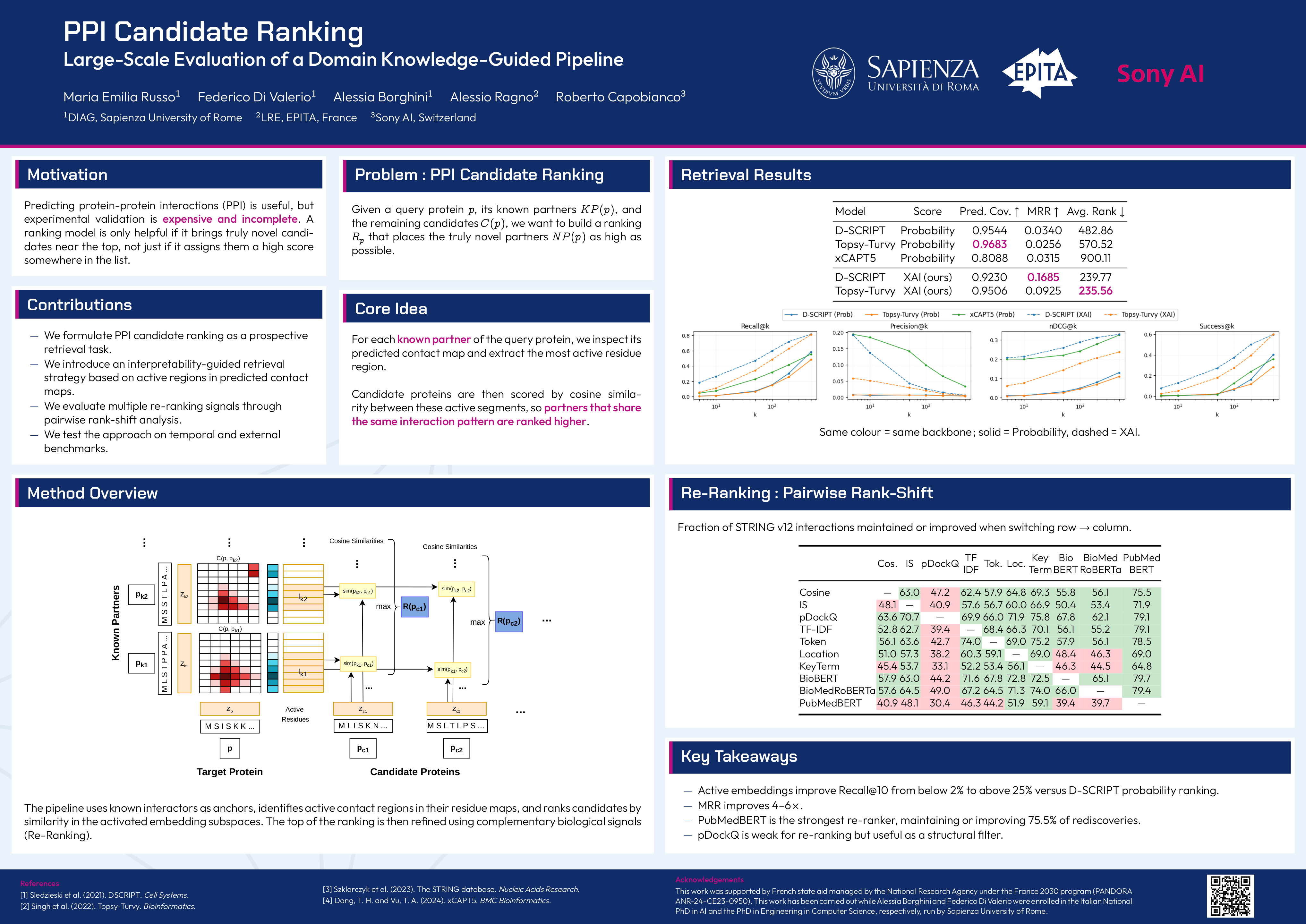
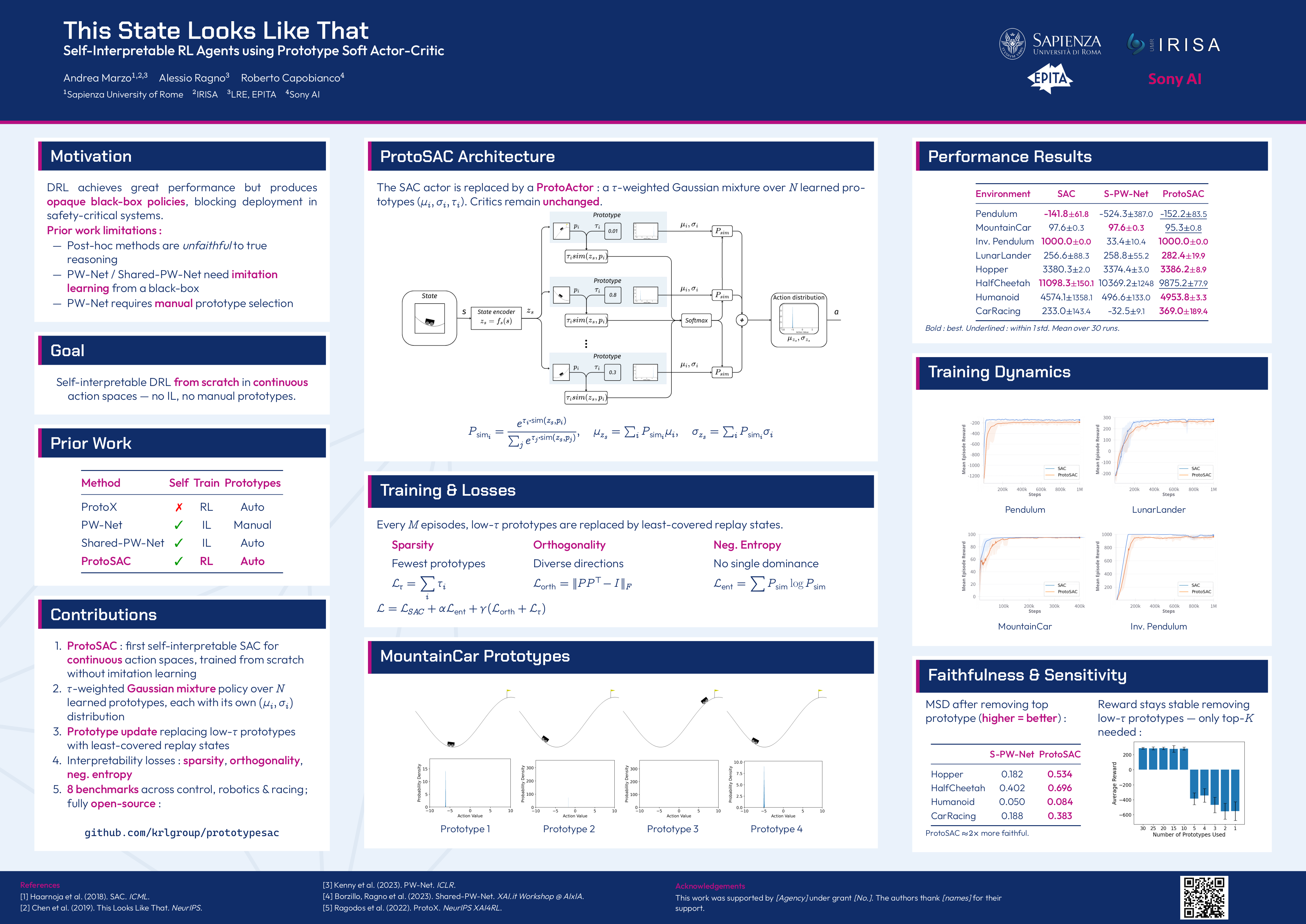
This State Looks Like That: Self-Interpretable Reinforcement Learning Agents using Prototype Soft Actor-Critic
ICML 2026
Prototype-based Interpretable Graph Neural Networks
IEEE Transactions on Artificial Intelligence, 2022
Latest News
20 Jan 2026 · Singapore
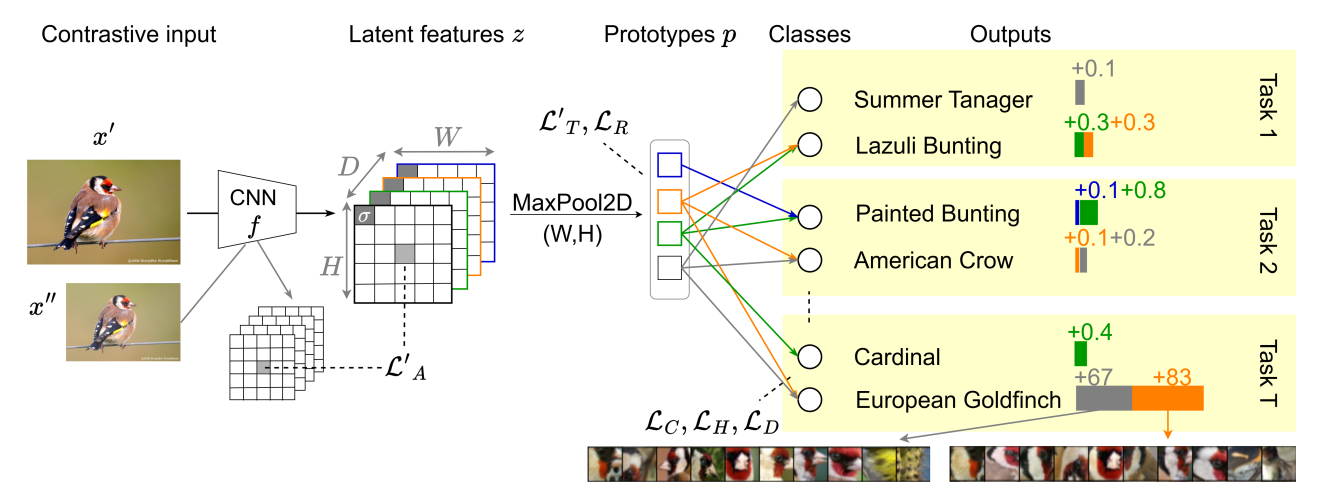
CIP-Net: Continual Interpretable Prototype-based Network @ AAAI 2026
CIP-Net keeps prototype-based continual learning readable while the model adapts to new tasks. The article page adds more context on how the architecture exposes evidence, how XAI helps monitor forgetting, and why the prototype view is useful for sequential learning.
Read article →
1 Dec 2025 · San Diego, USA
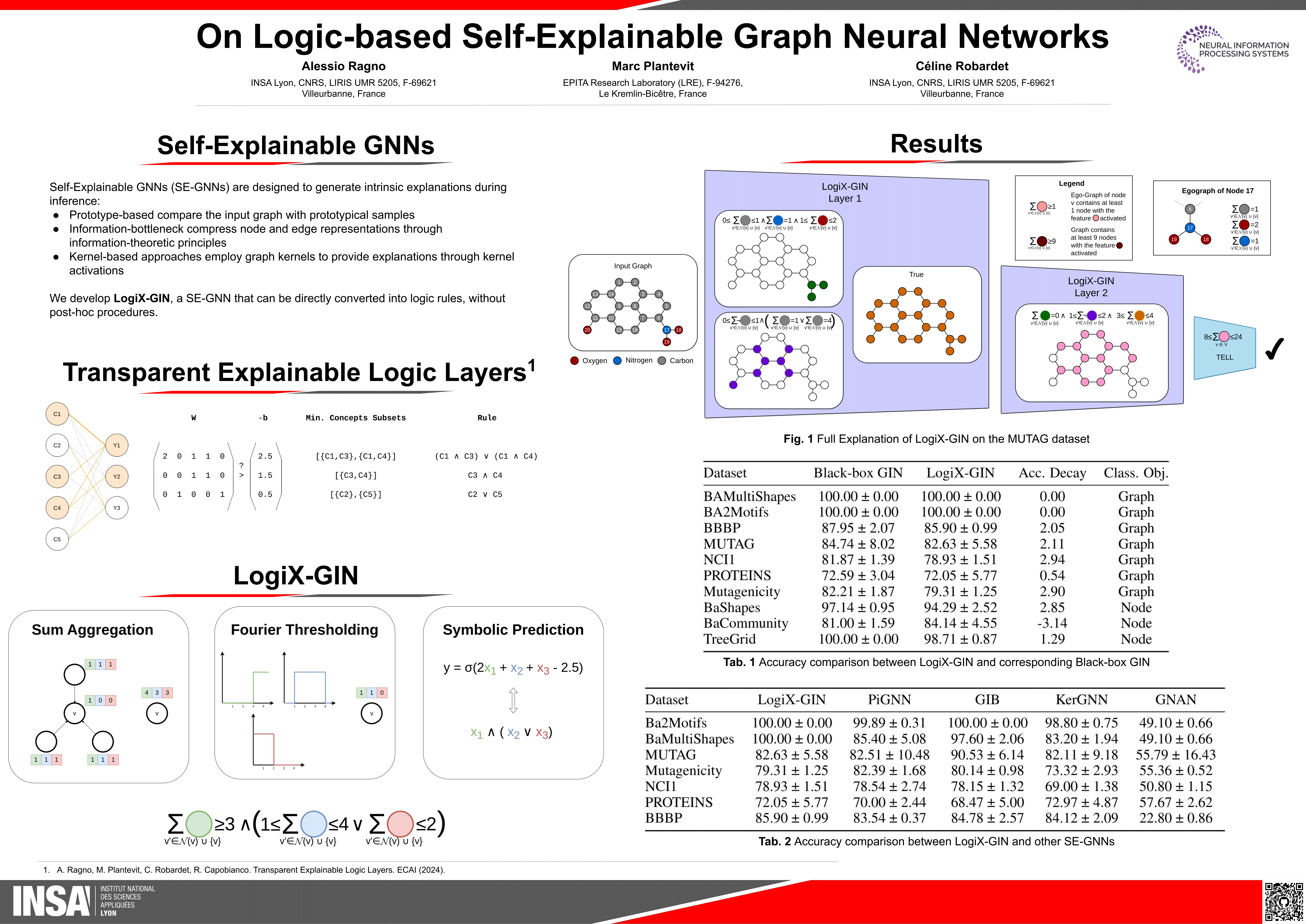
On Logic-based Self-Explainable Graph Neural Networks @ NeurIPS 2025
LogiX-GIN turns graph reasoning into a layer that can be translated into logic rules. The article page expands on the design, the interpretation pipeline, and the practical trade-offs of making the explanation part of the model itself.
Read article →

24 Oct 2025 · Wiley Interdisciplinary Reviews
XAI-Guided Continual Learning: Rationale, Methods, and Future Directions
This review brings together explainable AI and continual learning by mapping the methods that make sequential adaptation easier to inspect. The article page adds more detail on the taxonomy, the library release, and the problems it is designed to solve.
Read article →